INTERVIEW: SISAVANH PHOUTHAVONG
APR. 15, 2026
INTERVIEW: SISAVANH PHOUTHAVONG
APR. 15, 2026
Rachel Bubis: As a Lao refugee and immigrant, you describe how your experience during and post-Vietnam War continues to heavily impact your life and art. You’ve also mentioned that this experience of war shows up as visual fragments, unlike your siblings who remember specific sounds or smells. Why do you think your experience was different?
Sisavanh Phouthavong: As the youngest girl of seven, I grew up with four brothers and an older sister. My siblings were always very protective of me. Laos is a patriarchal society with strict Theravada Buddhism. I was always going against the grain, questioning rules, the culture, and traditions. Assimilating into the American culture was a double-edged sword. You respect your elders but question the validity of certain rituals and traditions.
RB: You’ve described your mom, who was a weaver in Laos, as a big inspiration to your work, particularly in how Laotian textile design incorporates intense colors, stylized animals and human motifs.
Do you feel there’s overlap between what she was expressing in her work and what you’re exploring through yours? Have you talked to her about this? What does she think of your work?
SP: My mom was a weaver in Laos, but she was primarily a stay-at-home mom. She had the help of nannies, but with seven kids, I can imagine how busy she was in maintaining the household after the Vietnam War. Most girls were taught how to weave at a very young age. She didn’t discuss the meaning of her designs because the woven pieces were for everyday use. And due to foreseen circumstances, she didn’t have any pieces she created from Laos. I took it upon myself to research the patterns and design in college. At that time, not much information was collected about the purpose and ethnic symbolism of the textiles. Both my parents have passed away, and while she was alive, we never really had a conversation about my work. She liked the traditional classical portrait paintings, but we never discussed my abstract or sculptural works.
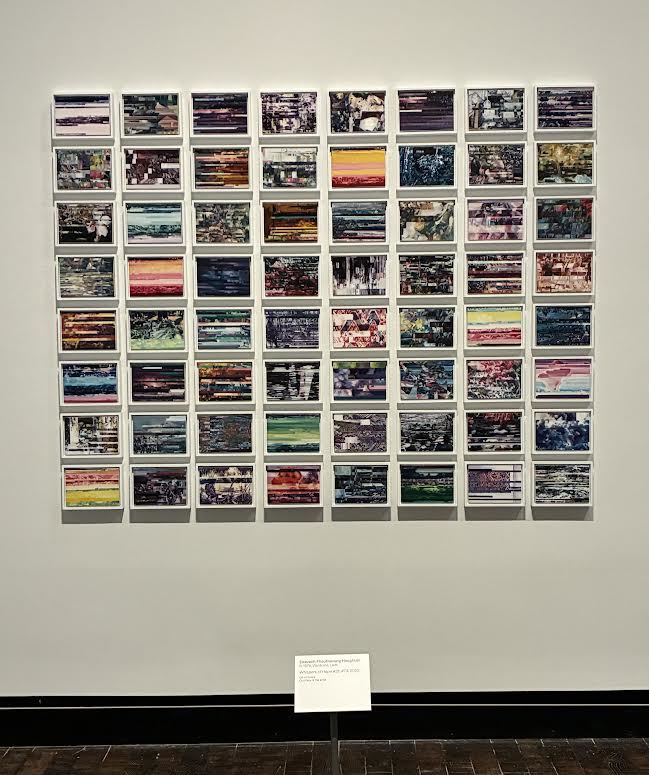
Sisavanh Phouthavong, Whispers of Hope, 5”x7” each, framed 6”x8”, oil on board, image taken by the artist
RB: Have you ever shown your work in Laos?
SP: No, I have not shown my work in Laos, but I have shown it in Thailand at the World College campus library. The students there ranged from kindergarten to high school. I think they saw the abstract work as decorative and informative. Currently, there is an appreciation of fine arts in Laos. There are some galleries and some museums. Laos is still a developing country, but it is behind Thailand in the number of massive modern museums and cultural centers that showcase contemporary art. Maybe someday I might apply for a residency in Bangkok or Chang Mai.
RB: Your work takes on some heavy subject matter. Does the process feel meditative or therapeutic? Emotional? What’s it like to spend long periods of time working through those themes? Have you uncovered anything surprising about yourself though the process?
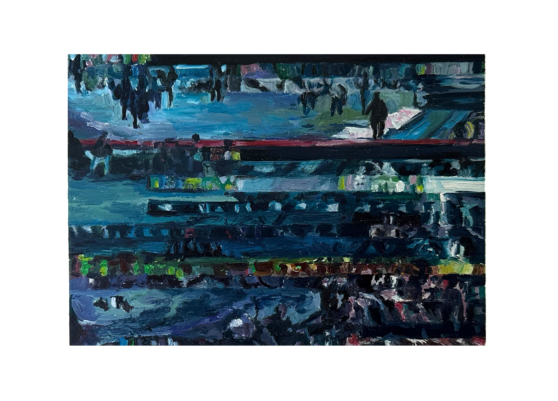
SP: I must remind myself of the purpose and goals of these works, and what I want my audience to get from them. Images from Whispers of Hope and Bird of Prey are image screen shots on my phone, or photos of video on my phone taken while watching TV. There is a disconnect that happens between me and the screen, but there is a rawness I feel for the human that is being killed, maimed, or displaced. Some of the images make me cry when I think of them as a person who has a mother, and the reason why they are there. But mostly, I question humanity and the political madness. And, ironically, using the buttery, classical oil paints, it takes me back to the foundation and my love for painting at its very core, to 2D principles. My love for drawing, values, color, light, and form. I relate these everyday paintings to On Kawara's One Day Daily Process Date Paintings. However, mine are just not dates painted but a selective recording of current world events, from ongoing wars, famine, refugee camps, to natural disasters.
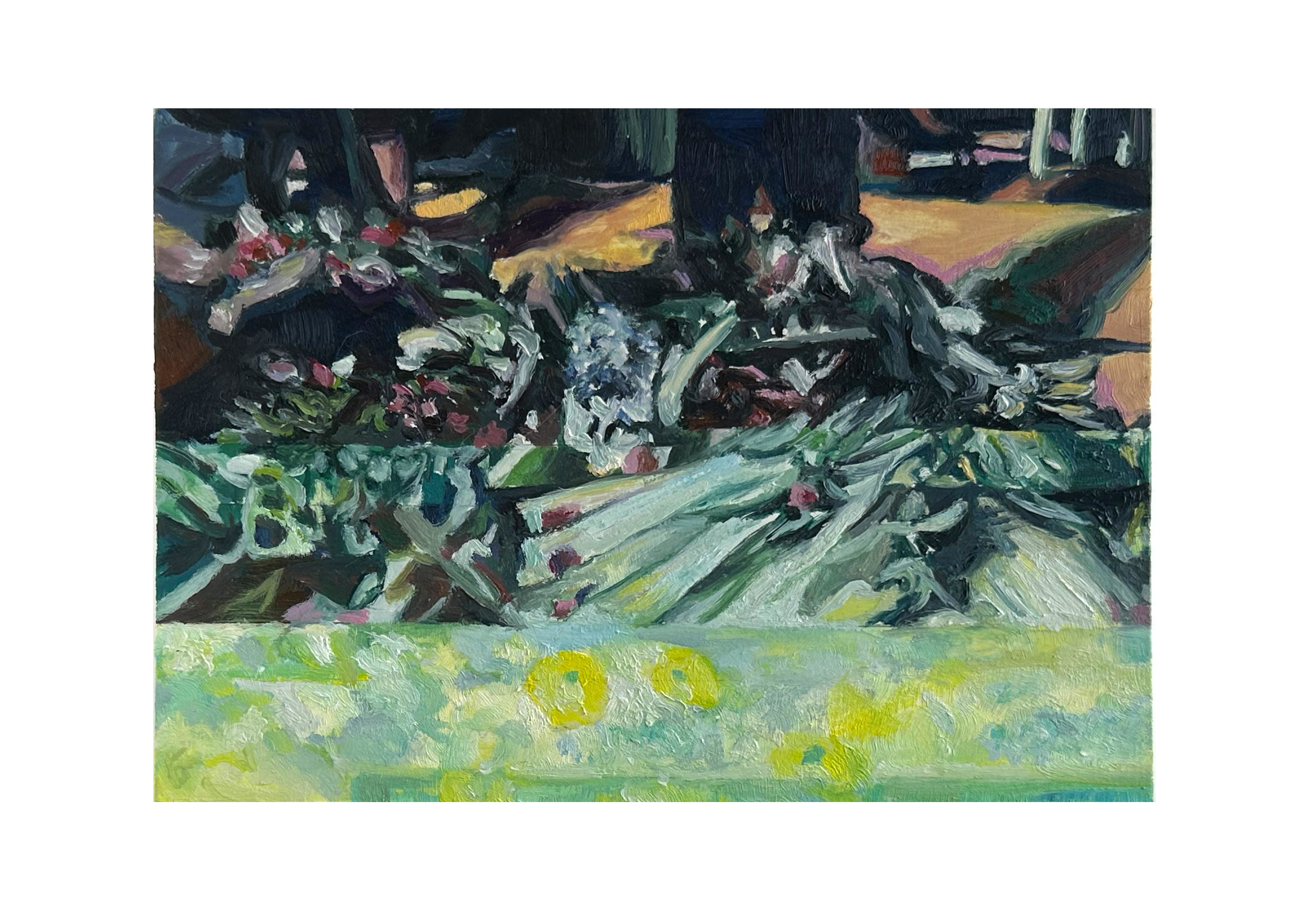
Sisavanh Phouthavong, Whispers of Hope, 5”x7” each, framed 6”x8”, oil on board, image taken by the artist
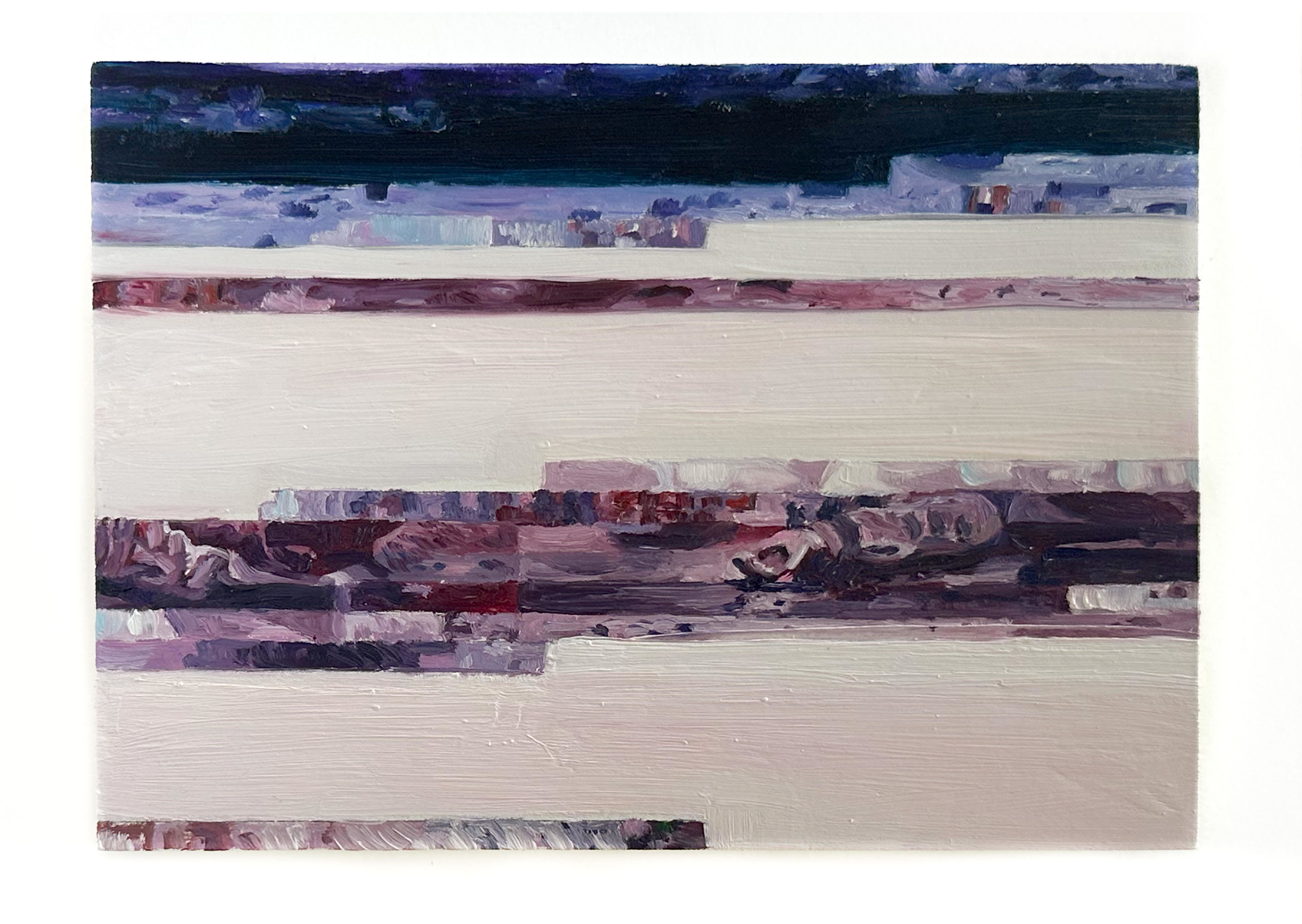
Sisavanh Phouthavong, Whispers of Hope, 5”x7” each, framed 6”x8”, oil on board, image taken by the artist
RB: You’ve described your paintings as nomadic and modular, able to be dismantled and rebuilt in different spaces, as a reflection of the refugee and immigrant experience. How does that idea shape the way you install the work?
SP: Birds of Prey was designed to look like a house. The glitched reference image for this painting were collage photos of drone images from the current wars. It was important for me to create this shape because so many lives have lost their homes, and some will never be able to return to their homeland. The painting was deliberately hung at a lower level so the viewer can fully immerse themselves in it.
RB: You’ve said you want viewers to feel “confused, aware, and in a state of conflict.” Have you ever been surprised by someone’s response to your work?
SP: In past exhibitions, I have had Vietnam Veterans come up to me after an artist talk and speak about how much we had in common, both in the emotional experience and from the aftereffects of war. Sometimes I forget that we are not very different from each other. I enjoy these conversations because it allows me to hear their stories and their struggles with war, not as civilians or casualties, but as soldiers.
RB: You’ve chosen acrylic paint for its immediacy and quick drying. How important is speed in your process? Does that material choice shape the energy or urgency of the work?
SP: In past works, the paintings were all created with acrylic paint because of its quick-drying properties. Speed was important for meeting deadlines and for using a safer medium indoors. But currently, the new paintings on exhibition at the Frist Art Museum are all painted in oil. My husband and I upcycled windows and constructed a greenhouse that I have converted into an outdoor studio. This allowed me to paint with oil paints again in a safe space.
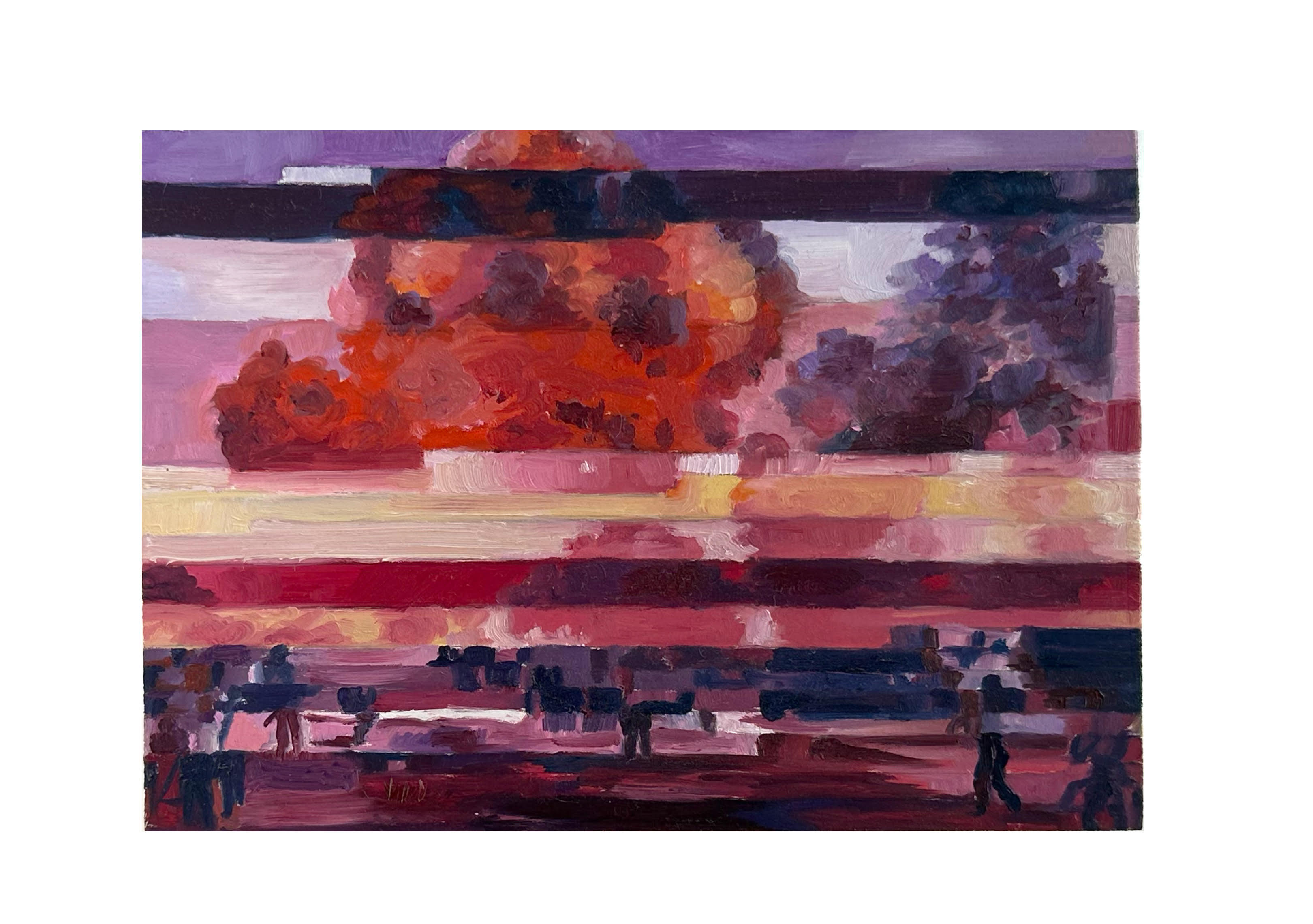
Sisavanh Phouthavong, Whispers of Hope, 5”x7” each, framed 6”x8”, oil on board, image taken by the artist
RB: You’ve mentioned feeling connected to early immigrant abstractionists in New York, especially in the way you work intuitively while still thinking through formal elements like composition, color, and line. What draws you to that lineage, and do you see your work in conversation with any specific artists or movements?
SP: Arshile Gorky was the first artist I connected with in undergrad. His biography as an immigrant who survived the Armenian genocide influenced my abstract expressionist painting at an early age. I am now combining my personal loss, fragmented memories, and redefining what it means to Laos American within the current political and environmental disasters. Anslem Keiffer, a German artist, influenced my work through his use of texture and the raw materials he infuses into his paint, creating a dystopian landscape that references Nazi Germany’s fascist past. Julie Mehretu’s use of maps and surfaces, Cecily Brown for her ambitious paint handling, Women Weavers of the Bauhaus, and Mark Bradford's use of materials and collage. Currently, I find inspiration from a wide variety of artists who are abroad. I find their work to be raw and unapologetic.
RB: What are you working on right now and what’s next?
I will continue to work on the series Whispers of Hope. I enjoy the intimate process and the immediacy of the outcome. And I find the work important enough to continue the conversation about what misinformation and disinformation are in the world of AI and the daily world news. I have a solo show in Fall 2026 at Southcentral Kentucky Community and Technical College, a three-person spring show in Spring 2027 at Gadsden Museum of Art, and a Fall 2027 solo show at Tri-Star Arts. I am super excited for all of these opportunities to show some old work and create some new sculptures and installation and video-based artwork.
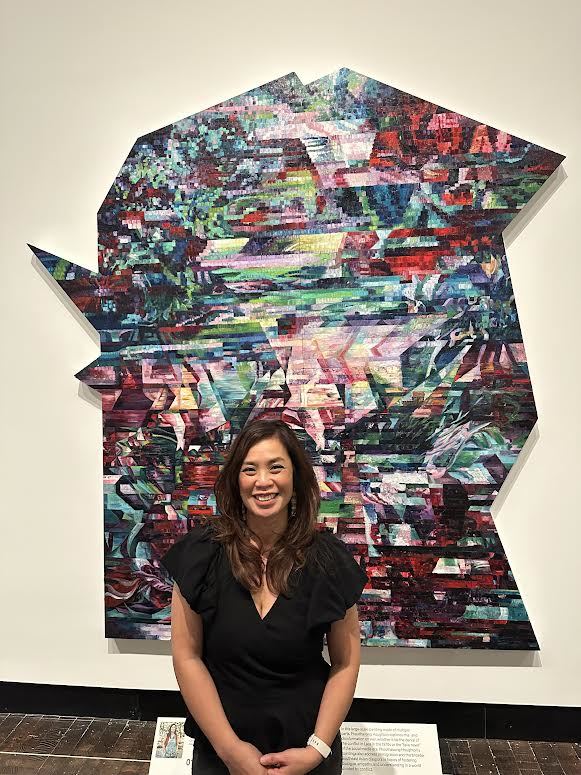
Sisavanh Phouthavong, Birds of Prey: Drones, 8' x 8', oil on board, image taken by the artist
Sisavanh Phouthavong Houghton is a Lao American interdisciplinary visual artist and Painting Professor at Middle Tennessee State University. Recently exhibited internationally in Italy and Greece and nationally at The Knoxville Museum of Art and Susquehanna Art Museum. She has been featured in The New Art Examiner, The Next-Door Neighbor, and various podcasts. Permanent collections include the Hunter Museum of American Art and the American Embassy, Paramaribo, Suriname. Houghton earned her BFA at the University of Kansas and an MFA at Southern Illinois University of Carbondale, IL. In 2023, she won Best in Show for the 38th Positive/Negative Exhibition, 2022 awarded a Tri-Star Current Art Warhol Foundation Fund and a MTSU's 2024 CUSA Faculty Achievement Award and 2022 Distinguished Creative and Teacher of the Year Award, 2020 nominated for the Joan Mitchell Foundation Arts Award, a 2019 Artfield’s' Painting Award, and 2017 Tennessee Arts Individual Artist Fellowship recipient. She is represented by Tinney Contemporary Gallery in Nashville, TN.
Rachel Bubis is a Nashville-based independent arts writer, regular contributor to The Focus blog, and LocateArts.org Web Manager for Tri-Star Arts.