Exhibitions
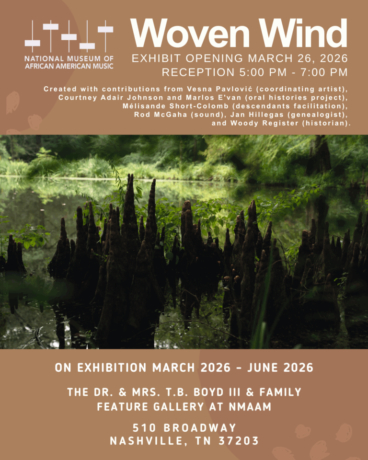
WOVEN WIND
NMAAM Galleries / 510 Broadway March 26 - June 12th
Vesna Pavlović, Courtney Adair Johnson, Marlos E’van, Mélisande Short-Colomb, Rod McGaha, Jan Hillegas, Woody Register
Woven Wind is a groundbreaking multidisciplinary project that explores the complex harmonies between music, memory, and the African American experience. Drawing from the Lovell Quitman archive, a collection of plantation records and Civil War-era photographs, this exhibition constructs an artistic platform for education, conversation, empathy, and healing.
Artist Vesna Pavlović, in collaboration with Courtney Adair Johnson, Marlos E’van, Mélisande Short-Colomb, Rod McGaha, Jan Hillegas, and Woody Register, weaves together photography, video, sculpture, and sound to uncover buried histories and amplify unheard voices. Archival research, community engagement, and conversations with descendants of the enslaved inform every aspect of the installation.
Central to Woven Wind is a mesmerizing soundscape composed by jazz luminary Rod McGaha, which fills the galleries and invites listeners to connect with the resilience and artistry of the African American musical tradition. Large-scale photographic tapestries and immersive video works create a powerful visual landscape that bridges past and present.
“We are thrilled to showcase Vesna’s boundary-pushing work,” says Dr. Bryan Pierce, NMAAM’s Director of Curation. “Her multisensory approach invites viewers to experience music in a whole new dimension.”
“Through Woven Wind, we aim to activate the archive and attend to the voices of the enslaved and their descendants,” adds Pavlović. “It’s an invitation to remember together and work towards healing in the present.”
Don’t miss the premiere of the Woven Wind film during the opening reception on March 26, 5:00-7:00 PM. Meet the artists and special guests Sarah Hawkins and Terry Minor Jr., descendants featured in the project, as we gather to engage with this transformative work. The exhibition will remain on view through June 12.
Woven Wind is made possible by the Vanderbilt University Provost Office Bridge Fund, The National Endowment for the Arts Grant for Arts Projects, The Tennessee Arts Commission Arts Access Grant, Vanderbilt University Scaling Success Grant, Mellon Partners for Humanities Education Collaboration Grant, Curb Center for Art, Enterprise and Public Policy Catalyst Grant, Engine for Art, Democracy, and Justice, and the Roberson Project on Slavery, Race, and Reconciliation University of the South, Sewanee. Special thanks to the Toles family for welcoming us and allowing us to listen.