Exhibitions
PAINTING AND HER WOMEN: A FEMINIST PALETTE SHOW
David Lusk Gallery Memphis / 97 Tillman St. February 26 - March 14th
Amanda Micheletto-Blouin, Amy Sacksteder, Allison Reimus, Angela Fraleigh, Asia Mathis, Christopher Kuhn, Chris Moss, Conrad Guevara, Courtney Puckett, Coulter Fussell, Donna Woodley, Emily Gherard, Emily Leonard, Jason Lord, Jason Rohlf, John Paul Kesling, John Ros, Jodi Hays, Jodi Hays, Jordan Buschur, Josh Smith, Julia Martin, Leeza Meksin, Linda King Ferguson, Lindsy Davis, Lovie Olivia, Marcia Goldenstein, Melissa Dunn, Nick Stolle, Paul Heckler, Russell Floersch, Tessa Greene O’Brien, Virginia Griswold, Wendy Robert
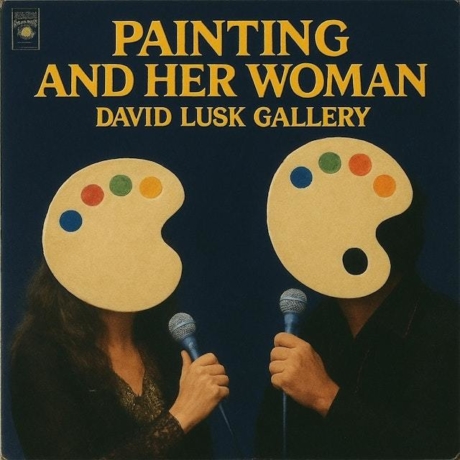
This 33-artist group show takes its conceptual point of departure from the album Johnny Cash and His Woman, co-written by June Carter, whose creative labor has historically been referred to under the possessive designation “Johnny’s woman.” This naming reflects a common pattern of erasure, one in which women’s contributions are rendered secondary, anonymous, or instrumentalized in service of a figure of cultural authority. Painting and Her Women engages this pattern by foregrounding the overlooked materials that sustain artistic practices, specifically the tools and processes that are foundational yet rarely given appropriate appreciation.
The artists in the exhibition engage materiality as a method of inquiry. They use processes to reconsider authorship and generate meaning. The palette, in particular, shifts from a secondary support to an active participant in the work. This shift raises a central question: does a work of art reside solely in the finished object, or does it also exist within the acts, tools, and decisions that lead to its making?
Within the exhibition, tools of painting function as both material and metaphor, crediting process, labor, and material intelligence as key components of authorship. Artists utilize palettes, biscuit cutters, and rolling pins. Their apertures, handles, and surfaces record touch, pressure, and duration, making embodied knowledge visible through form. The exhibition challenges singular perceptions and complexifies what it has meant to be defined by labels such as mother, woman, binary, female, and lady painter.